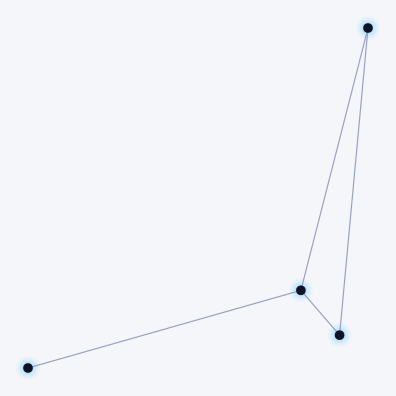
What it looks like
Apus is a small southern constellation introduced by Petrus Plancius in 1598, drawn as a bird of paradise. It sits near the south celestial pole, in a modest region of the sky with no bright stars or famous deep-sky objects. Its name comes from the Greek word for 'footless' — early European naturalists believed the birds of paradise had no feet because prepared specimens arrived without them.
Brightest stars
Apus has no bright stars; its brightest, Alpha Apodis, sits near magnitude 3.8.
| Star | Magnitude | Distance | Meaning |
|---|---|---|---|
| Alpha Apodis | +3.83 | 411 ly | — |
| Gamma Apodis | +3.87 | 160 ly | — |
| Beta Apodis | +4.23 | 158 ly | — |
| Delta-1 Apodis | +4.68 | 770 ly | — |
Mythology and history
Apus has no ancient mythology. It was created in 1598 by Petrus Plancius and named after the bird of paradise, one of the exotic creatures Dutch sailors encountered in the East Indies.
The footless bird
Apus was introduced by Petrus Plancius in 1598 from star positions recorded by Dutch navigators on their East Indies voyages. Its name comes from the Greek word apous, meaning 'footless' — European naturalists of the era believed the birds of paradise had no feet, because prepared trade specimens had their wings and legs removed. Only later did naturalists discover that the birds did have feet, but the name stuck, both for the bird and for the constellation.
How to find it
Look near the south celestial pole, between Chamaeleon and Triangulum Australe, on autumn and winter evenings from the southern hemisphere.
- Find the Southern Cross, then look south toward the pole.
- Faint stars — use a chart or planetarium app.
- Best from the southern hemisphere on autumn and winter evenings.
Key facts
- Abbreviation
- Aps
- Genitive
- Apodis
- Meaning
- The Bird of Paradise
- Brightest star
- Alpha Apodis
- Main stars
- 4
- Area rank
- 67th
- Best visible
- June
- Declination
- -75°
- Meteor showers
- —
- Neighbours
- Triangulum Australe, Circinus, Musca, Chamaeleon, Octans, Pavo, Ara
Deep-sky objects
Apus contains several globular clusters, including NGC 6101 and NGC 6362, both visible in small telescopes. The constellation lies in a star-poor region away from the Milky Way, so it is more notable for its clusters than for nebulae.
Frequently asked questions
What does the constellation Apus look like?
Apus is a small southern constellation named for the bird of paradise, lying near the south celestial pole between Chamaeleon and Triangulum Australe.
What is the brightest star in Apus?
The brightest star in Apus is Alpha Apodis, shining at around magnitude 3.83.
When is Apus best visible?
Apus is best seen from southern hemisphere during June.
What is the story behind Apus?
Apus has no ancient mythology. It was created in 1598 by Petrus Plancius and named after the bird of paradise, one of the exotic creatures Dutch sailors encountered in the East Indies.
Which constellations are near Apus?
Apus borders Triangulum Australe, Circinus, Musca, Chamaeleon, Octans, Pavo and Ara.

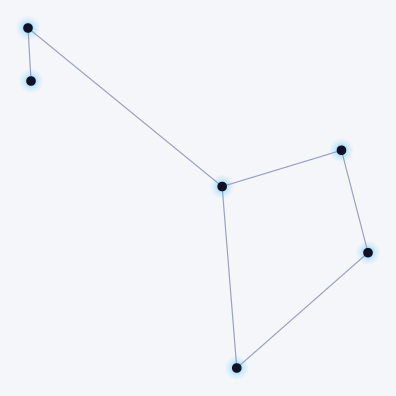 Chamaeleon
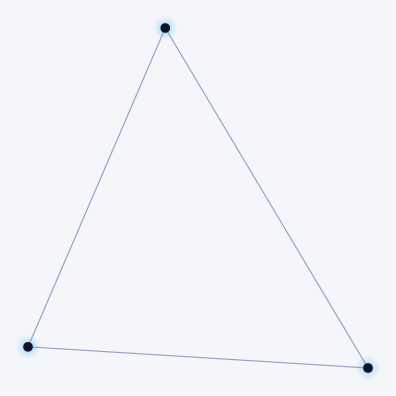 Triangulum Australe