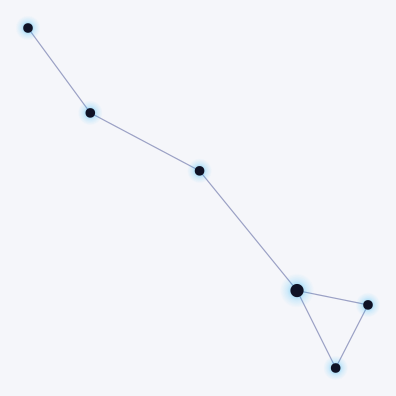
What it looks like
Dorado is a mid-sized southern constellation introduced by Petrus Plancius in 1598, drawn as a dolphinfish (not the mammal). Although its own stars are faint, it contains part of the Large Magellanic Cloud — the Milky Way's brightest satellite galaxy — and the Tarantula Nebula, the most active star-forming region in the Local Group.
Brightest stars
Dorado has no bright stars; its brightest, Alpha Doradus, sits near magnitude 3.3.
| Star | Magnitude | Distance | Meaning |
|---|---|---|---|
| Alpha Doradus | +3.30 | 176 ly | — |
| Beta Doradus | +3.76 | 1,040 ly | — |
| Gamma Doradus | +4.25 | 66 ly | — |
| Delta Doradus | +4.34 | 145 ly | — |
Mythology and history
Dorado has no ancient mythology. It was created in 1598 by Petrus Plancius from Dutch navigators' observations and named after the dolphinfish of the New World.
A fish of the New World
Dorado was introduced in 1598 by Petrus Plancius, based on star positions recorded by Pieter Dirkszoon Keyser and Frederick de Houtman on their voyages to the East Indies. The name refers not to the dolphin of classical myth but to the dolphinfish (Coryphaena hippurus), a brightly coloured fish of warm oceans. It was included in Bayer's Uranometria in 1603 and has remained in use ever since, its unremarkable stars overshadowed by the extraordinary objects within its boundaries.
How to find it
Look for the Large Magellanic Cloud in the southern sky on summer evenings — Dorado contains most of it.
- The Large Magellanic Cloud is the easiest landmark.
- Look for the Tarantula Nebula as a bright knot within the LMC.
- Best from the southern hemisphere on summer and autumn evenings.
Key facts
- Abbreviation
- Dor
- Genitive
- Doradus
- Meaning
- The Dolphinfish
- Brightest star
- Alpha Doradus
- Main stars
- 4
- Area rank
- 72nd
- Best visible
- January
- Declination
- -60°
- Meteor showers
- —
- Neighbours
- Caelum, Horologium, Reticulum, Hydrus, Mensa, Volans, Pictor
Deep-sky objects
The Large Magellanic Cloud is the Milky Way's brightest satellite galaxy and the fourth-largest galaxy in the Local Group. Within it sits the Tarantula Nebula (30 Doradus), the largest and most active star-forming region in the Local Group, containing the supernova remnant SN 1987A — the closest supernova observed since the invention of the telescope.
Frequently asked questions
What does the constellation Dorado look like?
Dorado is a southern constellation named for the dolphinfish, home to the Large Magellanic Cloud and its spectacular Tarantula Nebula.
What is the brightest star in Dorado?
The brightest star in Dorado is Alpha Doradus, shining at around magnitude 3.30.
When is Dorado best visible?
Dorado is best seen from southern hemisphere during January.
What is the story behind Dorado?
Dorado has no ancient mythology. It was created in 1598 by Petrus Plancius from Dutch navigators' observations and named after the dolphinfish of the New World.
Which constellations are near Dorado?
Dorado borders Caelum, Horologium, Reticulum, Hydrus, Mensa, Volans and Pictor.

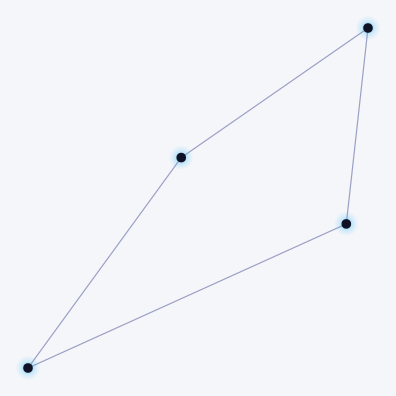 Reticulum
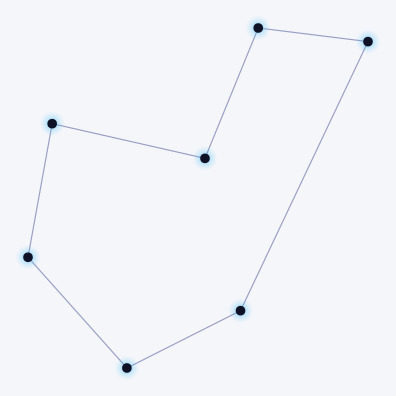 Volans