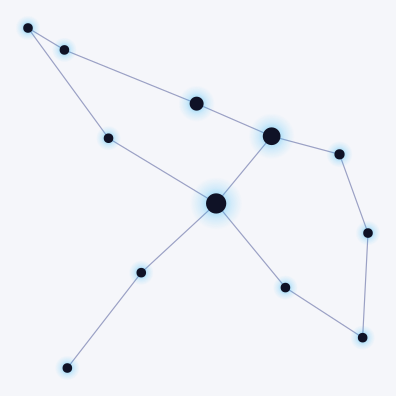
What it looks like
Cygnus is a prominent northern constellation lying along the Milky Way, drawn as a swan flying down the river of stars. Its five brightest stars form the Northern Cross, with Deneb at the top and the famous double star Albireo at the foot. The Milky Way rift — a dark lane of dust — runs through the middle of the constellation.
Brightest stars
Cygnus contains Deneb, one of the brightest stars in the sky, plus the striking colour-contrast double Albireo and the nearby bright star Sadr at the centre of the cross.
| Star | Magnitude | Distance | Meaning |
|---|---|---|---|
| Deneb (α Cygni) | +1.25 | 1,550 ly | Tail of the Swan |
| Sadr (γ Cygni) | +2.23 | 1,800 ly | Breast |
| Aljanah (ε Cygni) | +2.48 | 72 ly | Wing |
| Delta Cygni | +2.87 | 165 ly | — |
| Albireo (β Cygni) | +3.05 | 430 ly | Beak |
Mythology and history
In Greek myth, Cygnus is often identified with the swan form Zeus took to woo Leda, or with Cycnus, a devoted friend of Phaethon who was transformed into a swan.
Two swans
One tradition identifies Cygnus with the swan Zeus became to approach Leda, mother of Helen of Troy and the Dioscuri. Another tells of Cycnus, king of Liguria and close friend of Phaethon, who mourned so long at the banks of the river Eridanus that the gods transformed him into a swan and placed him among the stars.
Orpheus
A third tradition links the constellation to Orpheus, the legendary musician, who after his death was transformed into a swan and placed beside his lyre (the constellation Lyra) in the sky.
How to find it
Look for the Northern Cross along the bright band of the Milky Way on summer and autumn evenings, with Deneb at the top of the cross.
- Find Deneb — it forms the Summer Triangle with Vega and Altair.
- Look for the dark rift of the Milky Way splitting the cross in two.
- Best on summer and autumn evenings from the northern hemisphere.
Key facts
- Abbreviation
- Cyg
- Genitive
- Cygni
- Meaning
- The Swan
- Brightest star
- Deneb
- Main stars
- 9
- Area rank
- 16th
- Best visible
- September
- Declination
- +40°
- Meteor showers
- Kappa Cygnids, October Cygnids
- Neighbours
- Cepheus, Draco, Lyra, Vulpecula, Pegasus, Lacerta
Deep-sky objects
Cygnus is one of the richest regions of the sky for deep-sky objects. It contains the North America Nebula (NGC 7000), the Pelican Nebula, the Veil Nebula, and the Crescent Nebula, plus the X-ray source Cygnus X-1 — the first widely accepted black hole candidate.
Frequently asked questions
What does the constellation Cygnus look like?
Cygnus is a northern constellation known as the Swan, marked by the bright star Deneb and the Northern Cross asterism, which flies along the band of the Milky Way.
What is the brightest star in Cygnus?
The brightest star in Cygnus is Deneb, shining at around magnitude 1.25.
When is Cygnus best visible?
Cygnus is best seen from both hemispheres during September.
What is the story behind Cygnus?
In Greek myth, Cygnus is often identified with the swan form Zeus took to woo Leda, or with Cycnus, a devoted friend of Phaethon who was transformed into a swan.
Which constellations are near Cygnus?
Cygnus borders Cepheus, Draco, Lyra, Vulpecula, Pegasus and Lacerta.

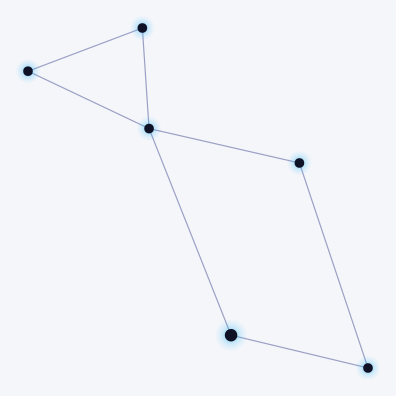 Lyra
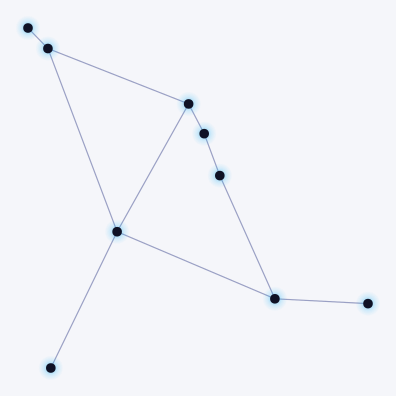 Aquila