
What it looks like
Sculptor is a mid-sized southern constellation introduced by Lacaille in 1756, drawn as a sculptor's workshop or studio. Its stars are faint, but the constellation is scientifically important: it contains the Sculptor Galaxy (NGC 253), one of the brightest and nearest starburst galaxies, and the Sculptor Group, the nearest galaxy group to the Local Group. The south galactic pole also lies within its borders.
Brightest stars
Sculptor has no bright stars; its brightest, Alpha Sculptoris, sits near magnitude 4.3.
| Star | Magnitude | Distance | Meaning |
|---|---|---|---|
| Alpha Sculptoris | +4.30 | 780 ly | — |
| Beta Sculptoris | +4.38 | 178 ly | — |
| Gamma Sculptoris | +4.41 | 179 ly | — |
| Delta Sculptoris | +4.59 | 144 ly | — |
Mythology and history
Sculptor has no ancient mythology. It was created by Lacaille in 1756 and named after the sculptor's workshop, one of several constellations celebrating crafts and sciences.
The sculptor's studio
Sculptor was introduced by Lacaille in 1756 under the name 'Apparatus Sculptoris' — the sculptor's apparatus or workshop. It was later shortened to Sculptor and included by Bode and others in their star atlases. Along with its neighbours Fornax (the furnace) and Caelum (the chisel), it belongs to a small group of constellations named for the tools and spaces of the artist's craft. In modern astronomy, the constellation is far more famous for what lies beyond its stars than for the stars themselves.
How to find it
Look south of Cetus and west of Fornax on autumn and winter evenings from the southern hemisphere.
- Find bright Diphda in Cetus, then look south.
- NGC 253 is visible in binoculars as a hazy patch.
- Best from the southern hemisphere and low northern latitudes.
Key facts
- Abbreviation
- Scl
- Genitive
- Sculptoris
- Meaning
- The Sculptor's Workshop
- Brightest star
- Alpha Sculptoris
- Main stars
- 4
- Area rank
- 36th
- Best visible
- November
- Declination
- -30°
- Meteor showers
- —
- Neighbours
- Cetus, Aquarius, Piscis Austrinus, Grus, Phoenix, Fornax
Deep-sky objects
The Sculptor Galaxy (NGC 253) is one of the brightest and nearest starburst galaxies, about 11 million light-years away and easily visible in binoculars. The constellation also contains the Sculptor Group of galaxies, the Sculptor Dwarf galaxy — a satellite of the Milky Way — and the Cartwheel Galaxy, a striking ring galaxy about 500 million light-years away.
Frequently asked questions
What does the constellation Sculptor look like?
Sculptor is a southern constellation named for the sculptor's workshop, home to the Sculptor Galaxy (NGC 253) and the nearby Sculptor Group of galaxies.
What is the brightest star in Sculptor?
The brightest star in Sculptor is Alpha Sculptoris, shining at around magnitude 4.30.
When is Sculptor best visible?
Sculptor is best seen from southern hemisphere during November.
What is the story behind Sculptor?
Sculptor has no ancient mythology. It was created by Lacaille in 1756 and named after the sculptor's workshop, one of several constellations celebrating crafts and sciences.
Which constellations are near Sculptor?
Sculptor borders Cetus, Aquarius, Piscis Austrinus, Grus, Phoenix and Fornax.

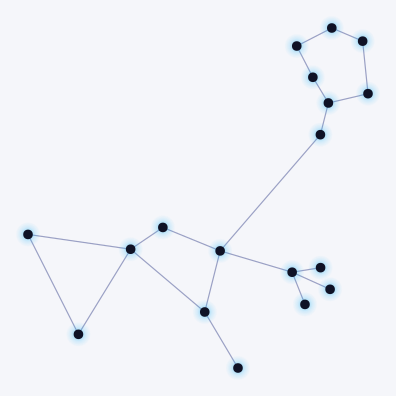 Cetus
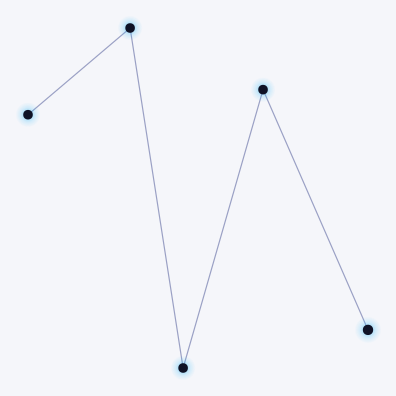 Fornax