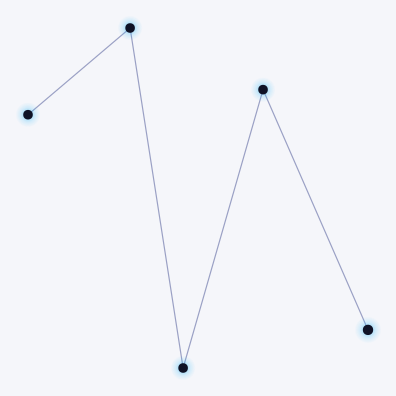
What it looks like
Fornax is a faint southern constellation introduced by Lacaille in 1756, drawn as a chemical furnace used in distillation. Its stars are unremarkable, but the constellation lies away from the Milky Way's dust and contains a rich harvest of galaxies — including the Fornax Cluster and the Fornax Dwarf galaxy. In 2003–2004, the Hubble Space Telescope pointed at a tiny patch of sky in Fornax to capture the Ultra Deep Field, an image of nearly 10,000 galaxies.
Brightest stars
Fornax has no bright stars; its brightest, Alpha Fornacis, sits near magnitude 3.9.
| Star | Magnitude | Distance | Meaning |
|---|---|---|---|
| Alpha Fornacis | +3.87 | 46 ly | — |
| Beta Fornacis | +4.45 | 169 ly | — |
| Nu Fornacis | +4.68 | 370 ly | — |
| Omega Fornacis | +4.90 | 470 ly | — |
Mythology and history
Fornax has no ancient mythology. It was created by Lacaille in 1756 and named after the chemical furnace used in distillation, one of several scientific instruments he placed in the sky.
The chemist's furnace
Fornax was introduced by Lacaille in 1756 under the name 'Fornax Chemica' — the chemical furnace, a small stove used by chemists and apothecaries for distillation. It belongs to the group of Lacaille's constellations named after tools and instruments, alongside Telescopium, Microscopium, Norma and Caelum. Although the constellation has no mythology, it carries a very modern history: it was here, in a tiny 2.4 arcminute field, that Hubble captured the Ultra Deep Field, revealing thousands of galaxies stretching back nearly to the beginning of the universe.
How to find it
Look between Cetus and Eridanus on autumn and winter evenings from the southern hemisphere.
- Find bright Diphda in Cetus, then look southeast for Fornax.
- Most of Fornax's treasures are galaxies — visible only in telescopes.
- Best from the southern hemisphere and low northern latitudes.
Key facts
- Abbreviation
- For
- Genitive
- Fornacis
- Meaning
- The Furnace
- Brightest star
- Alpha Fornacis
- Main stars
- 4
- Area rank
- 41st
- Best visible
- December
- Declination
- -30°
- Meteor showers
- —
- Neighbours
- Cetus, Sculptor, Phoenix, Eridanus
Deep-sky objects
The Fornax Cluster is a rich cluster of galaxies about 62 million light-years away, second only to the Virgo Cluster among nearby clusters. The constellation also contains the Fornax Dwarf galaxy — a satellite of the Milky Way — and was the site of the Hubble Ultra Deep Field, one of the deepest images of the universe ever taken.
Frequently asked questions
What does the constellation Fornax look like?
Fornax is a southern constellation named for the chemist's furnace, home to the Fornax Cluster of galaxies and the patch of sky where the Hubble Ultra Deep Field was taken.
What is the brightest star in Fornax?
The brightest star in Fornax is Alpha Fornacis, shining at around magnitude 3.87.
When is Fornax best visible?
Fornax is best seen from southern hemisphere during December.
What is the story behind Fornax?
Fornax has no ancient mythology. It was created by Lacaille in 1756 and named after the chemical furnace used in distillation, one of several scientific instruments he placed in the sky.
Which constellations are near Fornax?
Fornax borders Cetus, Sculptor, Phoenix and Eridanus.

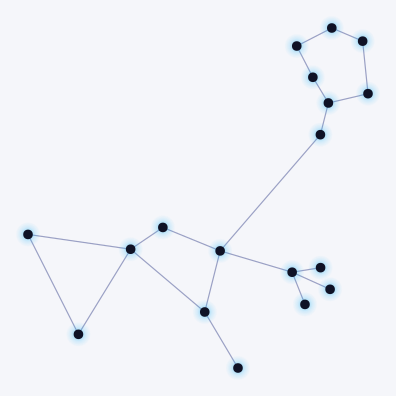 Cetus
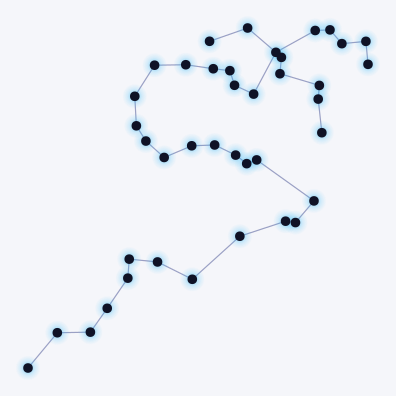 Eridanus