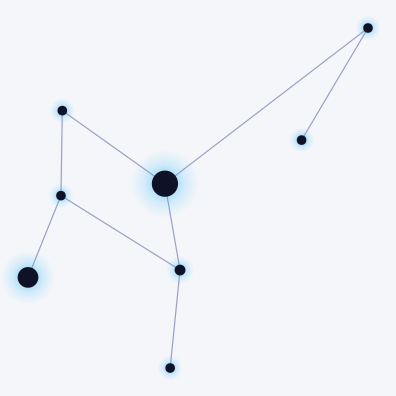
What it looks like
Camelopardalis is a large northern constellation introduced by Petrus Plancius in 1613, drawn as a giraffe. Though it covers a substantial area, its stars are faint — its brightest only reaches magnitude 4.0 — and it is best known for the nearby starburst galaxy IC 342 and the bright planetary nebula NGC 1501.
Brightest stars
Camelopardalis has no bright stars; its brightest, Beta Camelopardalis, sits near magnitude 4.0.
| Star | Magnitude | Distance | Meaning |
|---|---|---|---|
| Beta Camelopardalis | +4.03 | 870 ly | — |
| CS Camelopardalis | +4.21 | 4,300 ly | — |
| Alpha Camelopardalis | +4.26 | 6,900 ly | — |
| BE Camelopardalis | +4.39 | 800 ly | — |
Mythology and history
Camelopardalis has no ancient mythology. It was created in 1613 by Petrus Plancius to fill an empty region of the northern sky, and named after the giraffe.
A modern giraffe
Camelopardalis was introduced by Petrus Plancius in 1613, filling the large empty region between Ursa Major, Ursa Minor and Cassiopeia that had been left blank by Ptolemy. The name is a Latinised combination of camel and leopard — the two animals that early European observers thought the giraffe most resembled. Although it covers more sky than almost any other constellation, its faint stars make it one of the least-known; it is chiefly remarkable for the many far-northern galaxies and planetary nebulae visible through telescopes within its bounds.
How to find it
Look between Cassiopeia and Ursa Major near the north celestial pole — circumpolar from mid-northern latitudes, but faint.
- Find the Big Dipper and Cassiopeia's W; Camelopardalis fills the space between them.
- No bright stars — use a chart or planetarium app.
- Best on winter and spring evenings from the northern hemisphere.
Key facts
- Abbreviation
- Cam
- Genitive
- Camelopardalis
- Meaning
- The Giraffe
- Brightest star
- Beta Camelopardalis
- Main stars
- 4
- Area rank
- 18th
- Best visible
- February
- Declination
- +70°
- Meteor showers
- —
- Neighbours
- Ursa Minor, Cepheus, Cassiopeia, Perseus, Auriga, Lynx, Ursa Major, Draco
Deep-sky objects
IC 342 is a large spiral galaxy sometimes called the Hidden Galaxy because it lies behind Milky Way dust. The constellation also contains NGC 2403, a bright spiral galaxy, the planetary nebula NGC 1501, and the open cluster NGC 1502 — all good targets for small telescopes.
Frequently asked questions
What does the constellation Camelopardalis look like?
Camelopardalis is a large but faint northern constellation known as the Giraffe, filling the region between Ursa Major, Ursa Minor and Cassiopeia near the north celestial pole.
What is the brightest star in Camelopardalis?
The brightest star in Camelopardalis is Beta Camelopardalis, shining at around magnitude 4.03.
When is Camelopardalis best visible?
Camelopardalis is best seen from northern hemisphere during February.
What is the story behind Camelopardalis?
Camelopardalis has no ancient mythology. It was created in 1613 by Petrus Plancius to fill an empty region of the northern sky, and named after the giraffe.
Which constellations are near Camelopardalis?
Camelopardalis borders Ursa Minor, Cepheus, Cassiopeia, Perseus, Auriga, Lynx, Ursa Major and Draco.

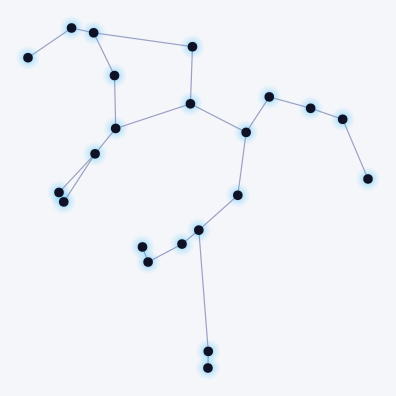 Ursa Major
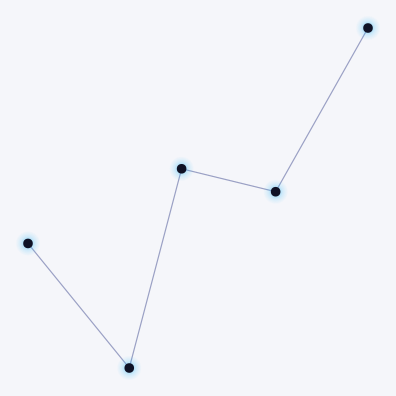 Cassiopeia