
What it looks like
Musca is a small southern constellation introduced by Petrus Plancius in 1598, drawn as a fly — the only insect in the modern list of 88 constellations. It lies just south of the Southern Cross and contains most of the Coalsack Nebula, one of the most prominent dark nebulae in the sky.
Brightest stars
Musca has no first-magnitude stars; its brightest, Alpha Muscae, sits near magnitude 2.7.
| Star | Magnitude | Distance | Meaning |
|---|---|---|---|
| Alpha Muscae | +2.69 | 306 ly | — |
| Beta Muscae | +3.05 | 340 ly | — |
| Delta Muscae | +3.62 | 91 ly | — |
| Lambda Muscae | +3.64 | 128 ly | — |
Mythology and history
Musca has no ancient mythology. It was created by Petrus Plancius in 1598 and is the only insect among the 88 modern constellations.
A fly of the southern sky
Musca was introduced by Petrus Plancius in 1598 from star positions recorded by Dutch navigators on their East Indies voyages. It was originally called 'Apis' — the bee — but was later renamed Musca, the fly. It sits just south of the Southern Cross, in a rich Milky Way region, and contains most of the Coalsack Nebula. Because it is a modern constellation, Musca has no classical mythology; its only mythological connection is the faint memory of the flies that plagued the Greek gods in later folklore.
How to find it
Look just south of the Southern Cross on autumn and winter evenings from the southern hemisphere.
- Find the Southern Cross, then look south for Musca.
- The Coalsack Nebula is a dark patch against the Milky Way — visible to the naked eye.
- Best from the southern hemisphere on autumn and winter evenings.
Key facts
- Abbreviation
- Mus
- Genitive
- Muscae
- Meaning
- The Fly
- Brightest star
- Alpha Muscae
- Main stars
- 6
- Area rank
- 77th
- Best visible
- May
- Declination
- -70°
- Meteor showers
- —
- Neighbours
- Apus, Carina, Centaurus, Chamaeleon, Circinus, Crux
Deep-sky objects
The Coalsack Nebula is a large dark nebula visible to the naked eye as a black patch against the Milky Way, about 600 light-years away. The constellation also contains the globular clusters NGC 4372 and NGC 4833, and the planetary nebula NGC 5189, known as the Spiral Planetary.
Frequently asked questions
What does the constellation Musca look like?
Musca is a small southern constellation known as the Fly, the only insect among the 88 constellations, lying just south of the Southern Cross and containing most of the Coalsack Nebula.
What is the brightest star in Musca?
The brightest star in Musca is Alpha Muscae, shining at around magnitude 2.69.
When is Musca best visible?
Musca is best seen from southern hemisphere during May.
What is the story behind Musca?
Musca has no ancient mythology. It was created by Petrus Plancius in 1598 and is the only insect among the 88 modern constellations.
Which constellations are near Musca?
Musca borders Apus, Carina, Centaurus, Chamaeleon, Circinus and Crux.

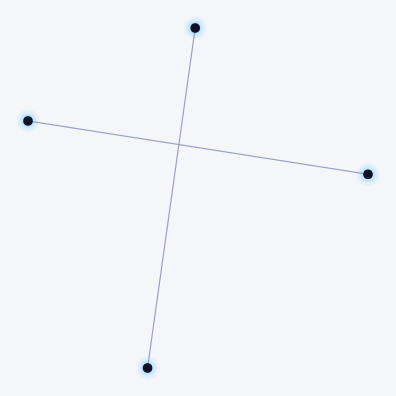 Crux
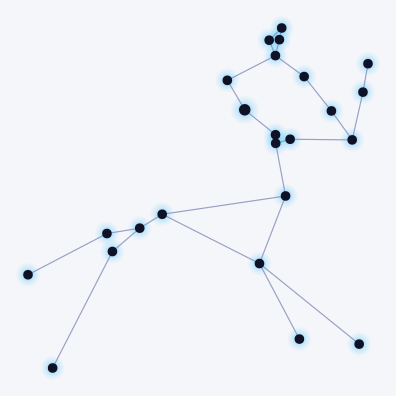 Centaurus