What the flag looks like
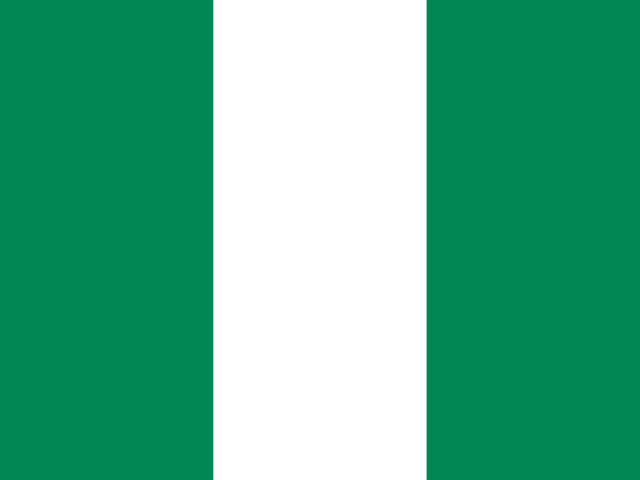
The Nigerian flag consists of three equal vertical bands of green (hoist), white (center) and green (fly). The proportion is 1:2. It was designed in 1959 by Michael Taiwo Akinkunmi, a 23-year-old Nigerian student, in a national competition, and was adopted on 1 October 1960, when Nigeria gained independence from Britain.
Colors and meaning
Green represents Nigeria's forests, agriculture and natural wealth, and white represents peace and unity. Together they symbolize the country's fertile land and the peaceful coexistence of its many ethnic groups.
Green
Represents Nigeria's forests, agricultural wealth and natural resources. Nigeria is one of the largest agricultural producers in Africa, and green is also a traditional color of the country's tropical vegetation.
White
Represents peace, unity and the desire for peaceful coexistence among Nigeria's more than 250 ethnic groups. White is placed between the two green bands to represent peace flowing through the nation.
Design origin
The flag was designed in 1959 by Michael Taiwo Akinkunmi, a 23-year-old Nigerian student studying in London, who won a national competition with over 3,000 entries. His original design included a red sun in the center of the white band, but the judges removed it to keep the design simple.
History and adoption
Nigeria gained independence from Britain on 1 October 1960, and the current flag was adopted on the same day. The design was chosen in a national competition held in 1959, which received nearly 3,000 entries from Nigerian students. The winner was Michael Taiwo Akinkunmi, whose design featured green, white and green vertical bands with a red sun in the center. The judges removed the sun to keep the flag simple, leaving the current design. The flag has remained unchanged since independence, including through the civil war (1967–1970) and Nigeria's transition to a republic in 1963.
Key facts
- Adopted
- 1 October 1960
- Proportion
- 1:2
- Designer
- Michael Taiwo Akinkunmi
- Capital
- Abuja
- Country code
- NG
- Similar flags
- Ireland, Ivory Coast
Historical and related flags
Nigeria used several flags during its colonial period before independence.
- British Nigeria (1914–1960): British Blue Ensign with a colonial badge.
- Northern Nigeria and Southern Nigeria (1900–1914): Separate colonial flags.
- Current flag (1960–present): Green-white-green vertical bands.
- Naval ensign: A white flag with a red St George's cross and the Nigerian flag in the canton.
- Presidential standard: Uses the Nigerian coat of arms on a green field.
Frequently asked questions
What does the flag of Nigeria look like?
The flag of Nigeria has three equal vertical bands of green (hoist), white (center) and green (fly). The proportion is 1:2.
When was the flag of Nigeria adopted?
The current flag of Nigeria was officially adopted on 1 October 1960.
What do the colors mean?
Green represents Nigeria's forests, agriculture and natural wealth, and white represents peace and unity. Together they symbolize the country's fertile land and the peaceful coexistence of its many ethnic groups.
Which flags look similar to the Nigeria flag?
Ireland uses vertical green-white-orange bands. Ivory Coast uses orange-white-green vertical bands — the reverse of Nigeria's but with orange instead of green on the hoist. Nigeria's plain green-white-green is unique.

 Ghana
 Ivory Coast
 Ireland
 Cameroon
 Benin
 Niger